Preface
There’s a particular kind of disappointment that doesn’t announce itself loudly.
It shows up quietly, when something you paid extra for asks you to overcompensate. When an experience is promised to feel smooth, but it instead requires more from you. So you find yourself scanning the scene, watching others, trying to determine your next step.
People don’t pay a premium for headaches.
They pay because they want less of them.
Less pain.
Less pressure.
Less friction.
Ease is the luxury everyone is chasing—across products, services, systems, and experiences. When ease is missing, frustration rushes in to fill the space.
This is what happens when an experience is priced as premium but designed without forethought.
Sasha and her husband, Brad, stepped out of the Uber at Dulles Airport on a sticky summer morning. The curb was already crowded. Wheels rattled across pavement. Voices overlapped. Beside a family ahead of them, a suitcase tipped over with a dull thud.
Sasha adjusted the strap of her shoulder bag and followed Brad inside. Everything felt unfamiliar. They didn’t usually fly out of Dulles. The morning carried its own version of controlled chaos. Still, there was excitement underneath it.
Brad had planned this trip carefully. Thoughtfully. He had insisted on first class as something special for Sasha, knowing what she liked and how much she valued a smoother, more comfortable journey.
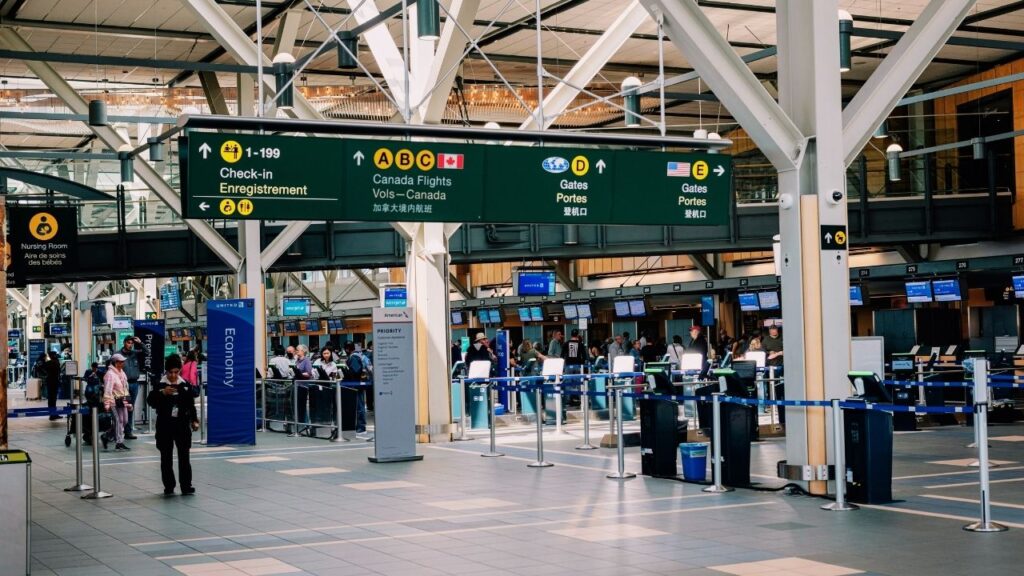
They moved with the flow of travelers until they reached their airline’s section. Then they slowed, and then stopped.
The Absence of Clear Direction
Brad scanned the counters. Sasha looked up instinctively, searching for what she expected to find: A sign or a marker. Something indicating where first-class ticket holders should go.
But among the ropes and scanners, there was nothing definitive. People stood in loose clusters, facing different directions, watching the counters and one another instead of any clear point of guidance. A woman with an imposing presence, a few feet ahead, raised her voice.
“Everyone line up here,” she said, waving her arm near the ticket scanners.
Sasha hesitated, perplexed. “Where is first class?” she asked. The woman eyed her but didn’t respond.
Brad didn’t answer. He couldn’t tell either. He looked again, then shrugged and rolled their bags forward. They joined the line.
Uncertainty Spreads in Shared Spaces
Minutes passed unevenly. The line barely moved. Brad scanned their passports and tickets. Sasha watched people step out, cross the room, then return looking uncertain. Somewhere behind them, someone sighed.
She shifted her weight from one foot to the other. “Where is the separate check-in?” she asked.
“Hold on, let me see,” Brad replied, his voice steady but tight.
Brad stepped out of line and asked the woman directing people where first class should go. She waved again, brows furrowed, without answering and turned away. He returned to their place. Sasha checked the time again.
A woman beside them muttered to her traveling companion, “I have no idea if this is even the right line.”
Sasha didn’t respond, but the thought lodged itself firmly in her chest.
Ambiguity as Fuel for Friction
When they finally reached the counter, the agent glanced at their boarding passes. “Oh,” she said. “First class is over there.” She pointed to another cluster of people that looked exactly the same.
Brad’s eyes widened as he repeated it aloud, half to Sasha, half to the air around them, looking toward the other line of travelers. “First class is over there!?!” Sasha’s eyes darted over at the woman stationed near the ticket scanners, directing foot traffic, who overheard Brad’s exclamation, and their eyes locked on one another, frustration between them dripped like an oil spill. Brad urged Sasha to remain calm. Sasha exhaled slowly as Brad thanked the agent. She then followed him toward the new line, but the heat simmered beneath her typically calm exterior.
Other nearby travelers overheard. They looked at one another. Slowly, they shifted out of line and followed, pulling their bags behind them.
Sasha and Brad waited again. Glancing at her watch, she thought about how much time they had lost. And asked, “How far is the gate?” By the time they were checked in, the answer arrived without words.
Delayed Direction
Brad grabbed her carry-on bag so they could move faster than they had planned to move all morning. There was no time to stop at the shops or grab the coffee they had talked about earlier. Hearts racing, breath shallow, they broke into a sprint, the question of whether they would make boarding pressing with every step.
What should have felt effortless had become tense. Not because the airport was crowded or due to a lack of preparedness. But because one part of the journey had been left open to interpretation.
When intuitive guidance is missing, even a premium experience begins to feel uncertain.
For Sasha and Brad, this wasn’t just an inconvenience. It was a poorly designed user journey.
And it’s in moments like these that user experience, or UX, lessons reveal themselves most clearly.
Bad UX Doesn’t Just Slow People Down. It Breaks Their Trust
Standing in the wrong line because no one tells you where to go is more than frustrating. It quietly erodes confidence.
Paying for a premium experience that feels indistinguishable from economy because pathways aren’t differentiated does the same.
Watching other travelers hesitate, second-guess, and follow one another without certainty signals something deeper. The system itself is unclear.
What Sasha and Brad experienced is what users encounter every day, not only in physical environments but inside digital systems as well. These experiences often share the same traits:
- unclear labels
- confusing pathways
- inconsistent guidance
- assumptions that people already know, or will figure it out
The result is rarely anger. More often, it’s uncertainty.
Good UX reduces effort. It removes the need to guess.
Why UX Requires Empathy, Not Just Execution
When organizations build products, whether websites, applications, portals, or dashboards, familiarity can quietly become a blind spot.
Those closest to the system know which “line” works. They know which button triggers each action. They understand the logic because they built it.
Users arrive without that context.
Over time, the gap between what a builder knows and what a user experiences can widen. When that gap goes unnoticed, friction creeps in. Small moments of uncertainty compound. Eventually, the experience begins to feel heavier than it should.
UX tends to fail when teams forget what it feels like to arrive without a map.
The Pattern
What happened at Dulles wasn’t just about inconvenience. It revealed a pattern.
People who had paid for a premium experience hesitated in the same way as everyone else. They looked around, asked one another, then followed movement rather than direction.
The design didn’t anticipate their arrival. The signage didn’t distinguish their path. In the absence of intuitive cues, people relied on each other instead of the system. That pattern shows up everywhere.
When experiences aren’t considered end to end, users fill in the gaps themselves.
People often watch, then mimic with hope they’re moving in the right direction.
Ease should have come from cost, but it was lacking in consideration.
The Takeaway
There are moments when a premium ticket won’t guarantee a first-class experience. Consideration does.
When experiences are treated as a form of service, rather than a sequence of steps, people can move through them with confidence instead of calculation.
Sasha and Brad eventually made their flight. Fortunately, the situation onboard was far better than the one that greeted them at the airport. Further into their journey, someone understood the importance of user experience.