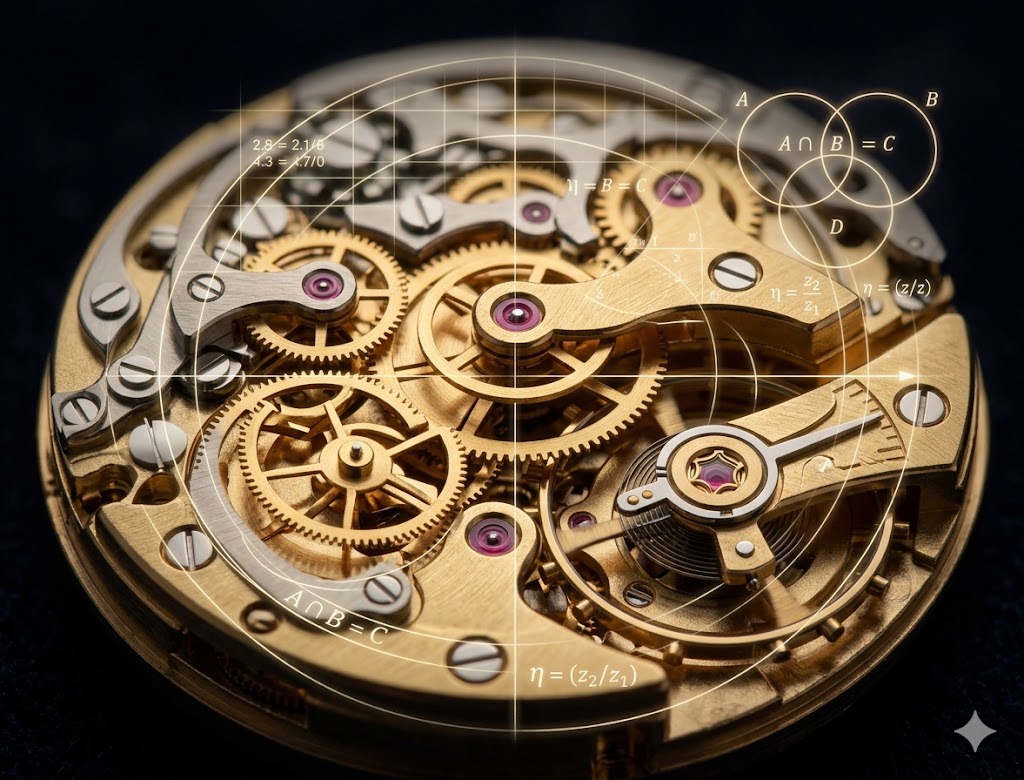
Most people don’t have discipline problems. They have a design problem.
We’ve been taught to believe that if something feels hard, the answer is to push harder. Add more effort. More hours or more pressure. As if intensity is the cure for everything.
But effort without structure doesn’t create progress. It creates exhaustion. And exhaustion has a way of disguising itself as ambition.
So we double down. We override signals and ignore resistance. Our inner monologue says we can rest later, understand later, or recalibrate another time. So “later” becomes the strategy. Until the system breaks.
Because every system — whether it’s your body, your workflow, or your thinking, responds to how it’s designed. Not how badly you want it to work.
But elegance isn’t something you earn after suffering. It’s something you build into the system from the beginning.
And once you see that…
You stop asking, “Why is this so hard?” And start asking a better question:
What did I design that made it this way?
If life feels harder than it should right now, perhaps it’s not a “you” problem. Maybe it’s a design problem.
The goal was never to struggle. But rather, to be in flow.
The Invitation
It was a cool spring afternoon.
The kind where the air feels light again. Where everything is quietly returning to life.
The cherry blossoms were bright and still in bloom — soft, full, almost weightless against the sky. In my backyard, the buds on my rose tree had finally opened, unfolding slowly, as if they understood timing better than we do.
I considered how nothing in nature forces its timing. It unfolds when it’s ready.
There’s something about spring that invites you forward and whispers: begin again.
I woke up that morning with every intention of working out. Getting back into my routine has been squarely on my mind. I wanted to move as if nothing had interrupted me.
But my body answered back in a language that doesn’t negotiate.
Pain. And pain, if you’re willing to hear it, is communication. This wasn’t punishment or weakness. Sure, it was inconvenient, but it was more significant than that. My body was providing clear communication.
And, for a moment, I considered overriding it. Pushing through anyway. Because that’s what we’ve been taught to do. If it’s hard, try harder. When it hurts, ignore it and keep pushing. Or, if it’s not working, the answer must be discipline.
But that’s the lie.
We’ve been conditioned to glorify struggle as if it’s proof of strength. As if grace is something reserved for the lucky, not the intentional.
So I stopped. Not because I couldn’t continue, but because I chose to listen before my system demanded it louder.
The Reality: Elegance Is Designed
Earlier that day, I spent some time in my spreadsheets.
I gave myself an hour.
I was focused on understanding why a certain formula wasn’t working. So I revisited a particular concept, and that’s when something clicked. The breakthrough happened not due to novelty in the material, but because of a necessary shift in my methodology. I was able to do that when I slowed down enough to ensure that I actually understood it.
I took the concepts apart, re-examining how it worked. And in doing that, I was able to see why my formula had failed before. Once I saw it clearly, rebuilding it correctly was inevitable.
I didn’t force the answer. I engineered clarity.
The coherence of the process didn’t come from motivation. It came from slowing down and redesigning how I approached the formula to get the results I intended.
Logic Determines Outcome
Failure in an Excel formula is never the result of laziness; rather, it stems from logic that has not been clearly defined. Sometimes we have to get clear on the outcome we’re seeking before we can set the formula up correctly.
The IF formula, for example, only recognizes six logical operators. Write outside those boundaries, and it returns an error every time.
It’s all about how you design the formula, write the code, or build the system.
Most systems don’t feel hard because they are inherently complex. They feel hard because they are poorly designed.
Life is no different.
Friction Isn’t Failure
When routines feel heavy, we assume something is wrong with us.
So we tell ourselves:
- I should be more disciplined.
- Maybe I should push harder?
- Where can I be more consistent?
But what if the issue isn’t you? But could the real problem be friction?
I was trying to return to full capacity while my body was still recalibrating. Trying to operate at a level my system wasn’t ready to sustain.
That wasn’t discipline. It was a misalignment. And misalignment always creates resistance.
The Shift: Stop Forcing. Start Designing.
Elegance is an architectural achievement rather than a chance occurrence; it is something you must actively construct.
For me, this construction takes the form of deliberate systems.
To eliminate decision fatigue and ensure a seamless start to the day, I prepare everything in advance:
- Mornings are decided before I even wake up.
- Weekly attire is curated, pressed, and ready.
- Nutrition is managed through pre-planned and packed meals.
- Work and personal bags are staged every night.
By removing these choices, I strip away the friction and scrambling that typically define a morning. I simply wake, exercise, and move through my routine. This isn’t luck—it is pure flow, engineered by design.
My approach to learning is also a product of intentional design. Rather than pursuing sheer volume, I prioritize clarity, deconstructing a single concept and rebuilding it until it is fully mastered.
Consider the process of painting.
One must first analyze the underlying structure, the composition, and the various layers. Only after this deep study do you begin to translate that understanding onto a blank canvas.
With time and deliberate practice, the complexity that once seemed daunting transforms into a natural, effortless fluidity.
Know Yourself, Design Accordingly
True elegance is an architectural achievement rooted in self-awareness. It requires a deep audit of your own internal mechanics.
- Your cognitive patterns and how you process the world.
- Your unique style of learning and acquisition.
- The specific factors that deplete your system versus those that offer nourishment.
The objective was never to mimic another person’s stride or force yourself into a pair of their Jimmy Choos.
Rather, the aim is to engineer a framework uniquely tailored to your own existence—spanning your domestic life, professional endeavors, daily habits, and even your periods of rest and healing. We all have our own specific path towards flow.
Reconstruction
The most fluid ways of living don’t just happen by chance; they are built. They are the result of deliberate structure.
True elegance is found in systems that operate smoothly because they were crafted with intention and foresight, even when that work remains unseen. It isn’t a matter of fortune; it is a feat of engineering.
When you encounter frustration or resistance…
Wait before internalizing the struggle as a personal failing. Examine the underlying framework instead.
Because luck has never been the source of a refined experience, design is.
Friction is feedback. Design is the response.